SEANC urges voters to reject both tax amendments on the November ballot
Constitutional caps on income and property taxes would squeeze funding for the services North Carolinians depend on
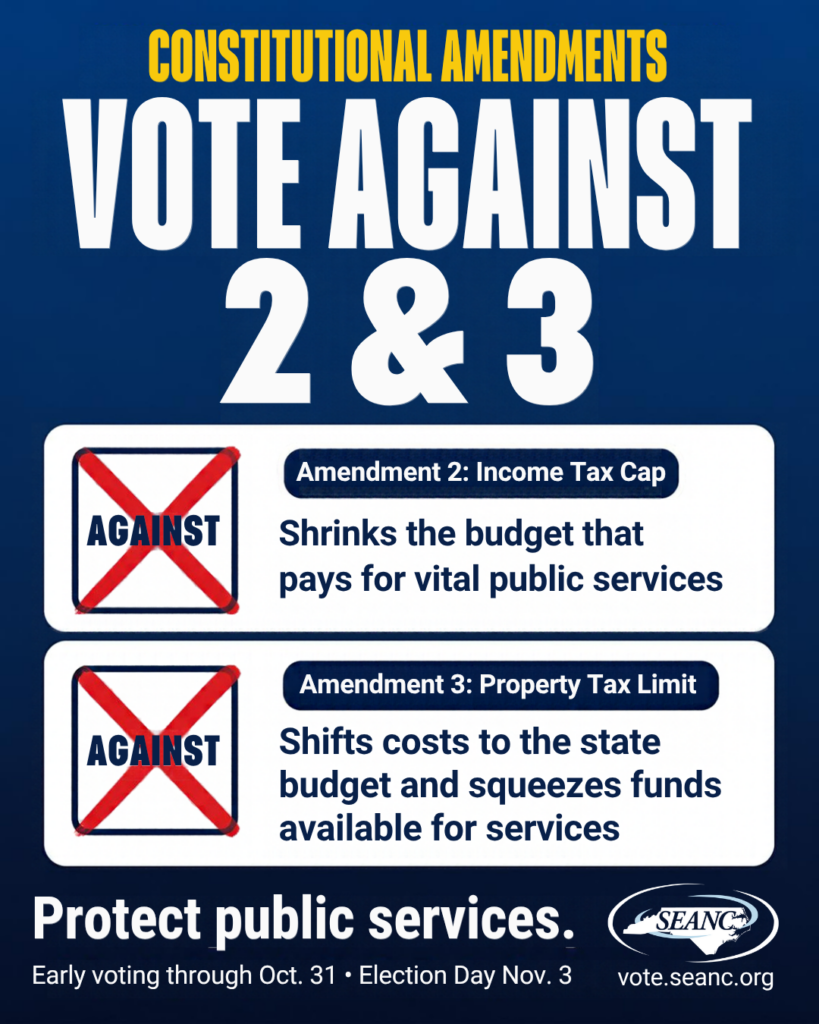
The State Employees Association of North Carolina (SEANC) urges voters to reject tax amendments on the Nov. 3 ballot that would further erode the state’s public services.
One amendment would cap the state income tax rate at 3.5%. The other would limit property tax increases by local governments.
Both amendments would write rigid tax limits into the North Carolina Constitution and make it harder for the state and local governments to pay for schools, public safety, infrastructure and the employees who provide those services.
“These amendments would lock today’s politics into the Constitution and tie the hands of every legislature, county commission, and city council that comes after,” said SEANC Executive Director Ardis Watkins. “State employees already know what happens when the money isn’t there. We’ve watched raises fall behind the cost of living and vacancies pile up, while taxpayers suffer from long lines at the DMV, more dangerous streets, diminished universities and schools, and an overall lack of quality public services. These caps would make that worse, and harder to fix.”
Amendment 2: Maximum income tax rate of 3.5%
The income tax is the largest source of money for the state budget. That budget pays for public schools, universities, prisons, highway patrol and state employee pay and benefits.
SEANC opposes the cap because it:
- limits the money needed for schools, infrastructure and public services;
- makes it harder to respond to economic downturns, emergencies or future needs; and
- puts a rigid ceiling in the Constitution that benefits the wealthy and corporations most.
Amendment 3: Property tax levy limit
SEANC opposes this amendment because it:
- restricts local governments from raising the money needed for schools, public safety and infrastructure;
- makes it harder to fund teachers, police, firefighters and emergency services; and
- shifts costs to the state or forces cuts to essential community services.
“Local communities know their needs best,” Watkins said. “A one-size-fits-all limit written in Raleigh doesn’t.”
Early voting is under way and runs through 3 p.m. Saturday, Oct. 31. Election Day is Tuesday, Nov. 3. The amendments appear near the end of the ballot, after the candidate races. Voters can find early voting sites, polling places and more information at vote.seanc.org.