


Big changes coming to the state’s HR law. Here’s what it means for you.
For the first time since the 1960s, North Carolina has rewritten the law governing how state government hires, pays, and manages its workforce. SEANC worked hard to make sure it came out favorable to employees.
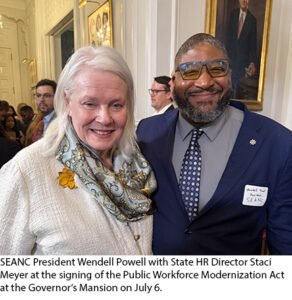
Gov. Josh Stein signed Senate Bill 1041, the Public Workforce Modernization Act, into law on July 6, creating a new Chapter 126A to replace the old Chapter 126. It takes effect October 1 and passed with unanimous, bipartisan support — a fact national commentators noticed. A Washington Post opinion piece held it up as proof that what seems impossible at the federal level can still work in the state capitols.
What changes for you:
- Paid parental leave expands to 12 weeks for both parents, plus statewide bereavement leave — making North Carolina the first state in the South to offer 12 weeks of fully paid leave to both mothers and fathers in the public sector.
- New apprenticeship and fellowship pathways, a shorter temp-to-permanent window, and extended veterans’ preference for military spouses.
- Performance-based pay incentives are now allowed, and the compensation flexibility agencies can use jumps from 10% to 30% — and now applies statewide, not just to a handful of agencies.
- Grievances must now be resolved within 120 days.
This week’s episode of The SEANC View podcast features State Human Resources Director Staci Meyer, walking through what the new law means for hiring, pay, leave, and grievance rights — including the questions our members have been asking.